
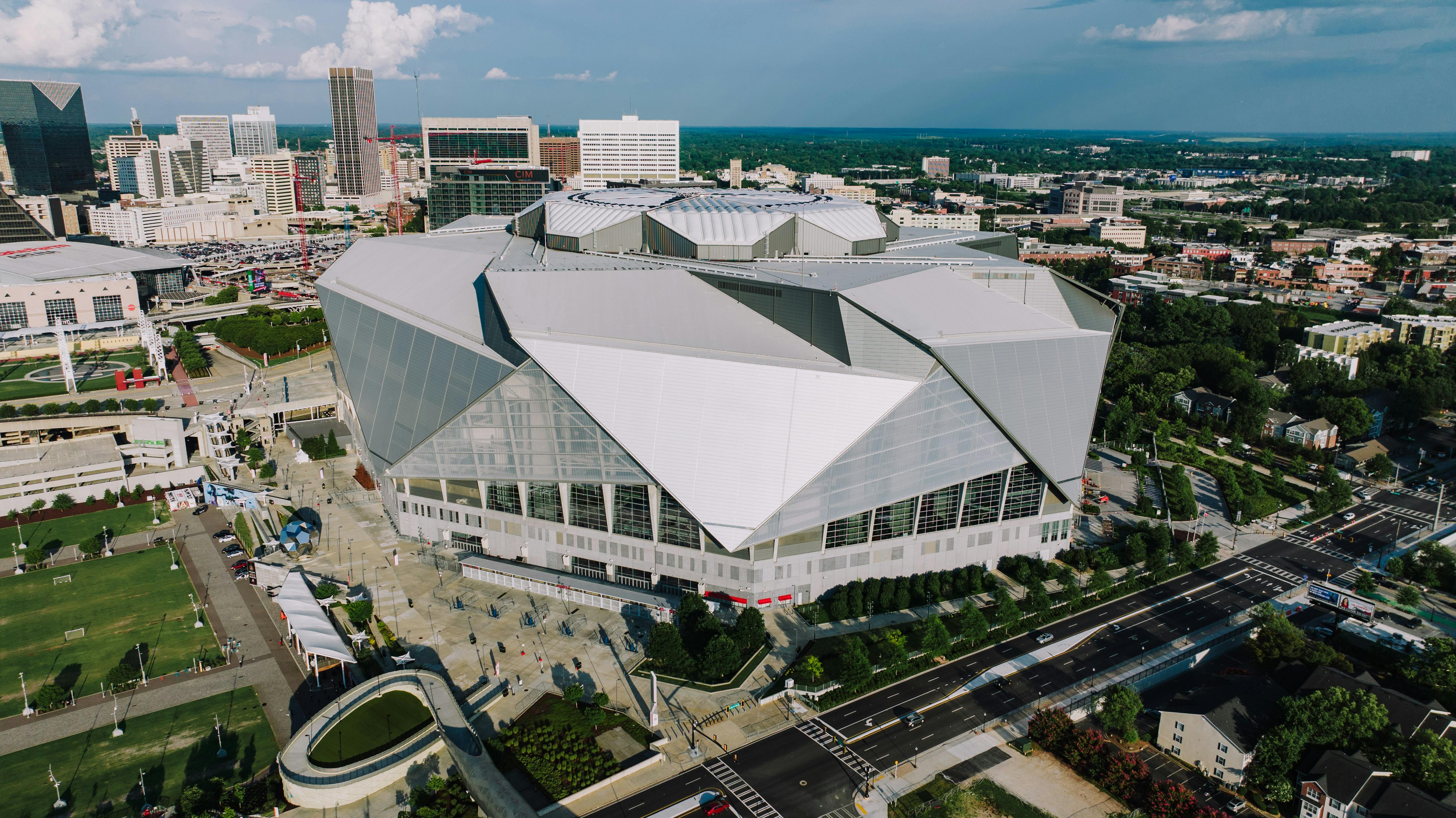
The Long-Term Legacy: Brand Equity and Global Positioning
The transient spike in passenger traffic and hotel bookings will, inevitably, subside. That is the nature of an “event-driven demand cycle.” The truly lasting value of hosting a global spectacle, however, lies in the intangible—the city’s brand equity—and the forced tangible improvements in governance.
From Local Hub to Global Stage: A Brand Transformation. Find out more about Atlanta World Cup short-term rental demand surge.
Atlanta has already demonstrated this capability. After the 1996 Summer Olympics, the city’s international image transformed from being primarily known as a transportation hub (or worse, sometimes confused with Atlantic City) to a “first-class place to do business, live and visit”. That event spurred infrastructure development and attracted corporate relocations, cementing its status as a major sports and business destination. This upcoming World Cup offers a second, perhaps even more potent, opportunity. As one leader noted, “nothing comes close to the World Cup in terms of mobilizing a global audience around a single event” compared to even the Super Bowl or the Olympics. With matches spanning three countries (U.S., Canada, Mexico) and an expanded tournament format, the eyes of the world will be focused intensely on our city’s execution. The long-term benefit is simple: **Credibility.** Successfully managing the logistics—transit, security, hospitality—for this massive undertaking provides the necessary proof-of-concept for future large-scale event bids. It’s a global portfolio item. When Atlanta bids for the next major convention or sporting event, the answer will no longer be a hopeful projection; it will be a historical fact supported by the success of the 2026 World Cup. Economic development officials are counting on this, believing the exposure will encourage visitors to return, bringing family, friends, and—crucially—new business investment.
The Regulatory Stress Test: Short-Term Rentals and Policy Maturation. Find out more about Impact of FIFA World Cup on Atlanta tourism infrastructure guide.
The most contentious, and potentially most transformative, legacy of this event will be found not in a stadium, but in the city’s **short-term rental regulatory framework**. The acute demand spike is already causing AirBnB bookings to hit unprecedented levels. This situation creates immediate, high-stakes friction between property rights, neighborhood character, and economic opportunity. The debate is already hot in late 2025. We have seen recent council actions, including a hotly debated ban on *new* short-term rental permits in specific, dense residential areas like Home Park. Simultaneously, the city must balance this with the fact that the short-term rental economy is a significant generator of tax revenue—in 2024 alone, hosts generated over $7.9 million in local occupancy taxes. The World Cup acts as a real-time, public laboratory for policy. The challenges faced by residents (noise, transient populations) and the economic pressures felt by hosts will force the City Council to move beyond stop-gap measures. We are past the point of simply debating if regulation is needed; the stress test demands codification. Actionable Takeaways for Property Owners and Civic Leaders: * **For Hosts:** Expect the current patchwork of rules—including permit requirements, non-primary residence limitations, and liability insurance minimums—to be rigorously enforced or permanently modified following the event. Complying with the letter of the law *now* is the best insurance against future policy tightening. Look closely at zoning classifications for your property. * **For Residents:** The data generated from this intense period—data on noise complaints, parking usage, and actual versus projected occupancy—will be the necessary fuel for political action. Use this window to document specific, measurable neighborhood impacts. * **For Policymakers:** The event provides the political momentum to move past incremental changes. The pressure to create a *comprehensive, sustainable policy* for the sector for the remainder of the decade will be nearly irresistible. The key will be designing a framework that successfully separates responsible, income-supplementing hosts from those operating de facto commercial hotel enterprises without oversight. This policy maturation is a necessary byproduct of hosting. If Atlanta can successfully govern the short-term rental sphere in a way that balances economic vibrancy with residential quality of life during this peak surge, it sets a gold standard for other host cities around the world.
The Future is Now: Sustainable Growth and Lasting Infrastructure. Find out more about Short-term rental regulation debate Atlanta after World Cup tips.
The conversation surrounding Atlanta’s growth has always been about managing the next wave. The World Cup isn’t just bringing five million-plus visitors; it is accelerating the timelines for projects that were already slated for the latter half of the decade. Mayor Dickens has already noted that millions of dollars are pouring into downtown revitalization projects, such as Centennial Yards and improvements to the Five Points MARTA Station, with the explicit goal of making changes that **”will last a long time not just for this FIFA moment”**. This focus on lasting impact is crucial for maintaining momentum after the tournament flags are lowered.
Investing in Multimodal Mobility
The planning for the World Cup is intersecting with broader regional goals for smart mobility. The Georgia Department of Transportation (GDOT) and city planners are leveraging this moment to test and deploy advanced technology. We’ve seen the push toward integrating safety technology with large-scale Vehicle-to-Everything (V2X) deployment on public infrastructure. The World Cup offers a high-visibility testing ground for systems designed to reduce congestion and enhance road safety—systems that will benefit every commuter long after the tournament concludes. Consider the wider context: The city is actively looking at reimagining car-centric corridors into multimodal, people-focused destinations. While these large-scale visions take years, the immediate need to move thousands of fans efficiently forces quick, tactical implementations of smarter traffic control, better signage, and improved pedestrian flow around venues and transit hubs. This is where the rubber meets the road, or more accurately, where the *smart signal* meets the *traffic light*.
Beyond the Stadium: Hospitality as a Competitive Edge. Find out more about Anticipated surge in Atlanta airport travelers World Cup strategies.
The brand equity gained is heavily reliant on the visitor experience outside the stadium walls. Studies from previous events show that even mid-scale hotels see substantial visit bumps during event weeks. For Atlanta to capitalize on this, the entire hospitality sector must perform, not just the largest venues. For a traveler planning their trip from, say, Spain or Morocco, the experience in a smaller, locally-owned restaurant, or the ease of navigating the BeltLine before a match, is just as important as the game itself. This sustained, positive performance across the spectrum of local offerings becomes the primary narrative the city exports back to the world. It’s not just the spectacular venue; it’s the welcoming, functional city surrounding it. This underscores the importance of community-level preparedness for the service industry.
Conclusion: Seizing the Moment—The Actionable Takeaways for December 2025. Find out more about Atlanta World Cup short-term rental demand surge overview.
The World Cup hype is not just about football; it’s about Atlanta’s next decade. We are past the point of simple speculation. The flight searches have spiked, the construction crews are mobilized, and the regulatory debate has sharpened. As we stand here on December 12, 2025, the path forward requires deliberate action from all city stakeholders to ensure the legacy outweighs the short-term chaos.
Key Takeaways for the City’s Future:. Find out more about Impact of FIFA World Cup on Atlanta tourism infrastructure definition guide.
* **Transportation Readiness is Paramount:** The strain on ATL and the surface streets is a known quantity. Success hinges on the immediate, seamless integration of public transit operations with event-day traffic management, prioritizing high-volume corridors. * **Regulatory Policy is on a Fast Track:** The short-term rental market is entering a phase of mandatory maturation. Expect permanent policy shifts addressing housing stock and neighborhood stability to emerge from the pressure of this event. * **Brand Equity Requires Execution:** The potential to elevate the city’s global profile—a boost that could yield hundreds of millions in long-term economic impact—is directly proportional to the logistical success during the tournament windows.
Your Actionable Insights:
1. **For Residents:** Engage now with local community planning discussions regarding traffic and short-term rental enforcement. The political window for influencing policy based on this event is open *now*. 2. **For Local Businesses:** Analyze your projected peak-demand schedule based on the match timings (especially if near a venue or major transit line). Cross-train staff, secure supplier contracts early, and understand the temporary tax implications of the visitor boom. 3. **For Future-Focused Leaders:** Document everything. Collect the data on transit performance, hotel occupancy surges, and regulatory compliance challenges. This data will become the essential blueprint for your next major event bid and for sustainable urban planning through 2030. This isn’t just about a tournament; it’s about the structural integrity and global narrative of a city poised for its next major chapter. The world is watching how Atlanta manages the pressure. Let’s ensure the infrastructure we build, and the policies we solidify, are ready for the long game, long after the final whistle blows. ***
We want to hear from you! Are you a local business owner bracing for the surge, or a resident planning your travel around the major match days? What infrastructure improvement are you hoping the World Cup preparations finally deliver permanently? Share your thoughts and perspectives below—let’s keep this crucial conversation going as Atlanta prepares to step onto the world stage.